Pentax SMCP-D FA 50mm f/2.8 Lens for Pentax and Samsung Digital

Pentax SMCP-D FA 50mm f/2.8 Lens for Pentax and Samsung Digital SLR Cameras
Customer Ratings: 5 stars
List Price: $649.99
Sale Price: $424.99
Today's Bonus: 35% Off
Buy Now

I bought tis lens for closed-up work in low light conditions. I am really surprised about clear pictures one can get. Build quality of lens is great and will last for years to come.

Click Here For Most Helpful Customer Reviews >>

VideoSecu 8 Pack Outdoor IR Dome CCTV Security Cameras Day Night

VideoSecu 8 Pack Outdoor IR Dome CCTV Security Cameras Day Night Home Surveillance Infrared Color CCD Wide Angle Lens with Bonus Power Supplies and Security Warning Stickers CCW
Customer Ratings: 4 stars
List Price: $779.97
Sale Price: $259.99
Today's Bonus: 67% Off
Buy Now

First let me state that CCTV is a side gig for me, but electronics on a component level is ongoing for 20+ years as a living. Qualifications to consider as you read the review that I will try and keep as short as possible. Although I tend to go overboard.

The package:

A box will arrive. Inside the box will be 8 boxes. Inside the 8 boxes will be 8 cameras, 8 power adapters, 8 instruction pamphlets, and 8 bags of mounting screws with generic plastic anchors. Typical deal here. While the cameras are packaged to absorb shock, there will be no padding between the 8 boxes and the inside of the large box so there is 'travel room' for transit shock. Nothing I would accuse of being poor, but nobody likes to open the box and see play room.

The contents:

Each box will contain the above mentioned. The cameras come in a foam sleeve. Upon removal you may notice some fingerprints on the glass. These are not white glove handled so be sure and clean them. Dry microfiber is suggested or use your t-shirt if you're mega cheap. Construction quality appears reasonable actually. I believe one of my cameras had a small scratch on it. While nobody is happy to see this, the metal is not corrosive so if exposed it's not going to rust. The pamphlet explains basic hookup and camera specifications. The power supplies are cheap 500ma 12v jobs that work fine, but I have no use for them. The screws are chromed and the anchors are those barrel style expanding plastic jobs they slice off at .0003 cents per 100. Worth noting is the security sticker in each box. While this is a nice touch, it's somewhat embarassing to display the web site for videosecu and then visit the website to find that it's down frequently. Free advertising is cool, but perhaps it's best to slice the bottom of the sticker off if you plan to display them.

The cameras:

Now the good stuff.

These do not claim an ip66 rating for water resistance. However they do claim to be 'outdoor' cameras. Please know the difference. An ip66 rating in short means excellent intrusion sealing. What these cameras have is the ability to keep running water seepage out if you mount them under an eve for example. They can be splashed just fine. However and despite having a rubber o-ring sealing the clam shell assembly of the bulb they are not able to prevent water penetration completely. Two entry points on the camera are 1) The rear cable inlet. 2) The front glass. The front glass has a lens isolation on it, more on this in a minute. But a cut is made in the glass to retain the piece and it is not 100% air sealed. The rear cable inlet, while snug is also not 100% air sealed. There is also no silica pack inside the assembly. Ten cents additional attention to these units would probably have earned them an ip66 rating. What you should understand about this is basic grade school science. Where there is a temperature differential, moisture is drawn to the warmer area. This is how clouds form and condensation ends up on windows. While the cameras do a good job of preventing absolute intrusion, a non hermetic seal allows water molecules to be drawn in through these areas the moment the on board electronics exceed the outside temperatures. Once it comes in, it's not exactly going to walk back out on it's own. It will lay on the electronics, wick into the DSP and lay waste to components over time. How much time is dependent on the environment they are in. There is also internal lens fog concern, but I had a rainy day here and have not observed this yet. Winter here will be the true test, but by then I may have sealed the cameras my self. A small tube of silicone and a bag of small silica gel packs from Staples along with these notes could help you prepare these units for absolute sealing. Also worth noting is the rear cable inlet being unsealed also allows for you to twist, and twist, and twist the cable until it breaks. Naturally you wouldn't do this for fun, but be aware it could happen.

Let's talk night vision and that lens guard mentioned above. Common with many night vision cameras that do not have this guard is a 'glow' introduced into the camera glass that the camera lens picks up. This is incredibly annoying and if you ever had/seen cheaper outdoor cameras you know exactly what this is. The lens guard is mounted in a hole in the front camera glass. It surrounds the CCD lens and guards it from the light intrusion until it clears the glass outside of the housing. This works to nix that glow. It works great on these cameras! Even in absolute darkness I do not have this glow effect. Very pleased with that, wish it was sealed better though. The night vision IR's shown are blue. I believe this is either a listing mistake or to make the cameras more cosmetically pleasing in the photos. These are clear issue IRs with a standard faint red glow when active. The light sensor responsible for turning them on/off is variable and works well. Some cameras do not have the variable regulation forcing the LED's to run full tilt and burn them out sooner. This system ensures the IR only runs when needed and at the intensity necessary to augment to display brightness. As for the 50ft rating I think a lot of people don't understand how this rating is tested. Place the camera in an absolute dark gymnasium. Walk 50ft from it and tell me if you can see your body. Please be reasonable when reviewing any camera for night visibility. Many people see these ratings and expect things to be lit up like Christmas tress at the rated distance. That is simply not how this game works. These cameras will work reasonably well to the eye at about 30ft and are quite bright at 20ft. This is more than enough for my personal needs, but everyone is different. The light beam dispersion is not perfect with the majority being centered in direct view, and ambient being about 40% at the widest viewable angle.

I think we should talk about the angle now. These are listed as 3.6mm fixed focal. The cameras I replaced them with were also 3.6mm focal. The view angle on these is significantly wider than the units I replaced. Image sensor size plays a part in this. The units I replaced have a smaller sensor so even when drummed through a 3.6mm lens the angle is reduced in comparison to a larger sensor run through the same lens. Do not let the focal length lend itself to your imagination of how 'wide' a camera will go persey. Yes 3.6mm is generally wider than 6mm, but not all focal lengths are created equal to one another when image sensor size comes into play. Remember that the focal length rating is just the rating of the lense, not the camera overall. These particular cameras offer view width comparable to most 2.8mm market cameras. I was actually quite shocked by the additional coverage area. Fish eye is there, but so moderate that you'll accept it i'm sure. There is a set screw inside the unit you can loosen to attempt to refocus the image, or even replace the lens with another focal length. I find them on Ebay fairly cheap as an alternative to replacing entire cameras. I checked the factory focus on one unit and it was well within 1% of perfect. I was happy about that as quality control starts to drift out of control on cheaper priced items.

Lastly, we're going to touch base on the IR cut filter and picture quality overall. I don't recall an IR cut filter even being advertised but the ad showed a sample picture I took at face value of the same camera on another ad, and that picture is clearly that of a camera with an IR cut filter so I was hoping it wasn't a fake. The cameras I replaced did not have an IR cut filter and you'll know this when you see the grass isn't always greener on the other side, in fact; It's blue. Once you go IR cut, you'll never go back. If you see people with blue hair and lawns that are blue you are enjoying the lack of an IR cut filter. Again, the ad doesn't state they contain one but I am assuring you they do. This is a big deal for cheaper cameras such as these. An IR cut filter that works properly usually jumps the retail price +20 bucks so I'd expect most cameras worth their salt to be priced 50-60+ range with an IR cut and this night vision capability. This is what made the value of this purchase for me in my opinion. If you are a seasoned CCTV installer you will shrug at the results. If you are replacing the cameras that came with your harbor freight system you're in for an absolute shock I promise you.

The quality of the cameras picture is difficult to express. I am not glowing about this to say the least. I believe this is attributed to the extreme focal length and on board processing combined. Colors are vivid and even at good distance clarity is there. However detail will 'smooth out' over distance on these and edges display an unusual artifact. It will not turn blurry but don't expect to read the words on a shirt from 10 feet away unless they are large. For general security this is acceptable to me. I can clearly see what people are wearing and doing on my property. If you need to count the hairs on a flys rear end however, it'll need to land on the camera lens. Envision that as you will but I don't think you'll be capturing license plate numbers from 50 feet away. I have seen this 'edge artifact' before and it appears as if they employ some sort of bicubic Interpolation in the DSP for these. You can find some good pictures of this effect with some clever Googling. This system along with the sellers general inability to properly explain the differences between 'outdoor' and 'ip66 rated' cost the cameras a star. I would like to see Fast ED Interpolation over bicubic but perhaps that's a cost consideration. Now you know.

Overall:

With a few small changes these could be formidable cameras in their price vs. feature range. Several mentioned here you can do yourself and enjoy the savings by sealing them up well. You can do nothing about the DSP behaviour. I think they are worth what was paid and are leaps and bounds above the 17 dollar cameras out there. If you have a cheap DVR system and have outgrown the 11 IR junk cameras that came with them, this is an option for sure. What I would like to see offered is a slightly cheaper bundle or even single unit offering that is less the included power adapter. I understand this feels like an added bonus, but most of us are using central camera power so we end up with a box of power adapters we have no use for. They shipped fast, feel relatively solid, and every one of them worked out of the box. I understand impressions, expectations, and defectives vary across the board. For me I am pleased with the cost to performance ratio and the next time I feel I have a job these cameras will suit, I will buy again.

Click Here For Most Helpful Customer Reviews >>

Samsung Series 9 NP900X4D-A05US 15-Inch Premium Ultrabook

Samsung Series 9 NP900X4D-A05US 15-Inch Premium Ultrabook
Customer Ratings: 4 stars
List Price: $1,149.99
Sale Price: $949.99
Today's Bonus: 17% Off
Buy Now

For years I've been looking for a 15" PC laptop less than 1" thick, under 4 pounds, with an SD card reader, backlit keyboard, and matte metallic finish at a reasonable price. There have been several machines that came close the Vizio CT15 (no SD card reader or backlit keyboard), the Sony VAIO T Series (too heavy), the Dell Inspiron 15z (thick, heavy, plastic body), and of course previous iterations of the Samsung Series 9 (too expensive) but the NP900X4D-A05US is the only one I've found that met all my criteria. It was worth the wait.

External hardware: A+

This machine is beautiful. Any thinner and you'd be able to shave with it. The silver magnesium chassis is a major upgrade over the previous Ash Black versions since it doesn't show fingerprints or dust. Keyboard travel is surprisingly good, and not at all shallow as I had originally expected for being in such a thin frame. The keyboard backlight is subtle yet very effective and build quality is fantastic. I remember seeing a YouTube video of the NP900X3D not having the magnet that holds the lid closed, but that has been fixed in the NP900X4D. The Elan trackpad is smooth as butter with the newest driver installed...I've even read a few posts from people with the same trackpad on laptops from other manufacturers who install the Samsung drivers because they are so good. There are lots of gestures and settings that can be tweaked though, so if you're coming from a non-multitouch trackpad there may be a little learning curve.

Internal hardware: B+

For my needs (and the needs of most people not doing 3D rendering/MATLAB/etc.) the i5 Ivy Bridge processor/4GB RAM/128 GB SSD is way more than adequate...but there are several laptops on the market with those specs that are cheaper. In this case you're paying a premium for the design. Both the RAM and SSD are upgradeable though so once SSD prices come down, making upgrades should be fairly easy.

Software out of the box: D-

I won't go into this too much since I kept the factory state for about 5 minutes, but let's just say that you'll want to do a reformat and clean install of Windows 8 (see comments for how to do this.) The amount of bloatware is overwhelming, and out of the box you're only left with ~66GB of free space on a 128GB SSD. But I guess that's the case for just about every OEM Windows machine these days.

Software after reformat/clean install: A+

I remember when computers took almost two minutes to boot up. The NP900X4D does it in 4.08 seconds! By doing a clean install of Windows 8 and removing the recovery partitions, free space increases to ~100GB, and everything works much, much faster.

Bottom line: Internally, the NP900X4D-A05US is pretty average by current standards, but it is still blazing fast for everything but the most processor-intensive tasks. In terms of design, there is not a better looking machine on the market, period. The price seems to fluctuate frequently daily (I bought mine at $899.99) so if it's higher than that, I'd suggest keeping an eye on the page as it will probably come back down.

Click Here For Most Helpful Customer Reviews >>

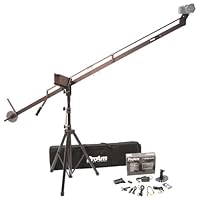
Turn-key ProAm USA 8 ft DVC210 DSLR Camera Crane Production

Turn-key ProAm USA 8 ft DVC210 DSLR Camera Crane Production Package
Customer Ratings: 4 stars
Buy Now
Played with it in the yard, at 8ft, to get a little use to it, then used it for a market commercial/performance, at 12ft, with the ProAm USA 4ft Camera Crane Extension Kit. The height and pan/tilt, gave some very nice looks. I have to get some weight plates, but that was expected, but didn't have time to get them

Click Here For Most Helpful Customer Reviews >>

Nikon SB-700 AF Speedlight Flash with Softbox + Bounce Reflector

Nikon SB-700 AF Speedlight Flash with Softbox + Bounce Reflector + Batteries & Charger + Accessory Kit for D40, D60, D3000, D3100, D5000, D5100, D7000, D300s, D3 &amp, D3s Digital SLR Cameras
Customer Ratings: 5 stars
Buy Now
I am taking pics with my Nikon D3000 since 2 years now, I ordered my SB700 speedlight a month ago and I am so much satisfied with the purchase, everything came as they show, everything of good quality and my flash is more than awesome. I am not a pro photographer but I love taking good quality pics, this flash is helping me a lot with lights. Hope this helps to someone.

Click Here For Most Helpful Customer Reviews >>

Shure SM58-LC Cardioid Vocal Microphone without Cable

Shure SM58-LC Cardioid Vocal Microphone without Cable
Customer Ratings: 5 stars
List Price: $188.00
Sale Price: $99.00
Today's Bonus: 47% Off
Buy Now

The first rule of microphones is that, "No one microphone is perfect for every purpose." Rule two is, "Experiment with different mics in different applications to find your signature sound." I've used Shure SM58's along with their ancestors and relatives back to 1968. I primarily used them for broadcasting and recording spoken word content but I have used (and still do use) them for singing some back up vocals.

The SM58 does one thing well and that is vocal performance when used very close to the mouth for public address use. Some people, me included, actually sound better and more comfortable in a live performance setting when using another mic, the Shure SM-57. The SM-58 is a very good vocal mic and for some people probably the best choice. For example, anyone who can not resist putting the mic right up against their lips while singing will probably want the SM-58. People with softer or weaker voices will want the SM-58.

The SM-58 is highly directional and has a noticeable yet manageable proximity effect (which means the bass increases the closer you get.) This mic does not pick up well from much over 8 inches away. The reason so many singers think you are supposed to shove microphones practically inside your mouth is because the ball type Shure vocal mics require you to get them very close or they don't sound right. On the other hand, the SM-57 sounds best several inches away from the user's mouth and works fine up to 12 inches away. While the SM-58 is certainly the number one professional PA vocal mic, there are precious few other uses for it because it has a colored sound with a prominent frequency response boost in the upper midrange plus a sound source has to be very close before it is picked up clearly. It works ok for conga drums and the like, but the SM-58 is about the last thing you'd want to use to mic a sax or guitar. Personally these mics are not the best for my mic technique or the basic nature my voice, but for some people they sound great. The live vocal mic that works best for me is the Shure SM-57 with a windscreen. However for other people the SM-58 works better. It depends on your voice and what you want the mic to do. If you have a very deep voice, the SM-58 might be the second best choice after the SM-57 which has a better low frequency response.

One certain advantage of the SM-58 is the excellent gain before feedback capability. This mic can be turned up louder than almost any other mic without that annoying PA squeal. Another advantage of the SM-58 is that it is still available (at a slight extra cost) with a built-in on/off switch. The SM-58's ball shaped grills are very sturdy and even if you should dent one you can get a replacement which screws right on for about ten dollars. I've seen SM-58's dented, rusty, dusty, smoked up, spit into, with pieces missing and slammed into a hardwood stage with the full weight of a boom stand adding mass to the fall and yet I've never seen but one stop working and that malfunction was due to an on/off switch that got dirt in it.

All the pro-line Shure mics are top quality. The pro line Shures also hold their value well. If you buy one and decide you don't like it, you can get about what you paid for it on eBay. I would compare as many mics as possible before buying one. Senneheiser's EVOLUTION mics sound really good too and are worth a look. The SM-58 will be the number one on-stage vocal mic for the foreseeable future because most people follow the crowd instead of actually trying out different mics and picking the one that works best for their particular voice. These things are so durable that even if they stopped making them today they'd still be around for another 20 years at least.

Click Here For Most Helpful Customer Reviews >>

Canon EF-S 18-135mm f/3.5-5.6 IS STM

Canon EF-S 18-135mm f/3.5-5.6 IS STM
Customer Ratings: 5 stars
Buy Now
The short version: If you plan on shooting any video with the Rebel T4i, this is the lens you want to buy first.

The long version: While the new video autofocus feature on the Rebel T4i will work with any Canon autofocus lens, the 18-135mm STM focuses quickly and silently, unlike the 18-55mm lens in the other kit. The 18-55 has a noisy, slow focus motor that constantly 'hunts' for focus while taking video, and the whirring of the non-STM motor is easily picked up by the built-in microphones. It doesn't sound so bad in the field, but once you playback your video clips, it's magnified a great deal, making the audio nearly useless for any serious work. But even with recording Audio separately, the constant focus blur makes the video completely useless anyway, so you may ask yourself why the T4i has any video capability at all.

Enter the 18-135mm STM. Not only is the STM motor virtually silent, it's fast enough to keep focus while you shoot (well, depending on the speed of the target, of course. No lens can work miracles.) This is the lens all those gorgeous sample videos on the Canon website were taken with, and with good reason.

Now, there are certainly better Canon lenses for still photography--this isn't even an "L" series lens--but for video work on the T4i, it's hard to beat. It is also both quicker to focus and quieter than the other STM lens currently on the market, the 40mm STM pancake. (I can barely hear the 40mm focus, but the 18-135mm really is next to silent.)

My recommendation for anyone looking to purchase the Rebel T4i/650D is to insist on the 18-135mm kit and forget the 18-55mm kit. I wish I had. Not that the 18-55 is a horrible lens--it's a decent starter kit lens for still shots. But at the time of this writing, the 18-135mm STM lens is nearly impossible to find by itself--and it lists on the Canon site for $549 when they do have it in stock. So you can either pay the $250 premium for the 18-135 kit over the 18-55 kit, or pay $550 later when you realize the 18-55 won't "do for now" until you can afford the 18-135 STM lens, if you want to take advantage of the video autofocus of the T4i. I suggest the 18-135 kit, plus another $199 for the 40mm STM pancake. That will give you a good solid pair of lenses to get started with, while you save up for an L-series telephoto.

Click Here For Most Helpful Customer Reviews >>