Showing posts with label digital camera cannon slr. Show all posts

3" LCD Foldable Viewfinder 3x Magnification Loupe /Magnifier

3' LCD Foldable Viewfinder 3x Magnification Loupe /Magnifier For any CANON NIKON DSLR with 3' LCD screen
Customer Ratings: 4 stars
Buy Now
I shoot a lot of advertising, more still than video. I much prefer having a removeable eye piece (like the Zacuto that snaps on), but everyone seems to sell the one that mounts on the base .... and all my cameras 5D's and 7D's I have changed to Arca swiss mounts. I purchased this as it was inexpensive enough for me to give it a shot. It is light, I really like the way it snaps on and off! I can focus. It is WAY better than the Hoodman and the crappy elastic bands and the price point is awesome!

I would give this 5 stars if the build quality holds up over time. But for now excellent value!

Click Here For Most Helpful Customer Reviews >>

Schlage BE365VCAM716 Camelot Keypad Deadbolt, Aged Bronze

Schlage BE365VCAM716 Camelot Keypad Deadbolt, Aged Bronze
Customer Ratings: 5 stars
List Price: $238.00
Sale Price: $116.12
Today's Bonus: 51% Off
Buy Now

For years we have been using a key pad activated deadbolt for front doors in our various homes no keys to lose or give to various family members only four digit codes. Up until now, all of the key pad units we have installed, extend and retract the deadbolt using a small battery powered electric motor.

This issue we've encountered is when the batteries become weak, the motor (in some cases) does not have enough power to retract the bolt and we must revert to another entrance to get into our home. Although these unit allow one to use a key to override the electronics, we never seem to have the key "on us" when it's needed. Fortunately we have a keypad on our garage door and that serves as an alternative entrance when this occurs. These deadbolt retraction failures have been occurring more and more often even with fresh batteries. I suspect the motor is or has worn out.

With this in mind, I shopped the market for an electronically activated dead bolt with manual bolt action. In other words, instead of a motor extending and retracting the deadbolt, one would use a lever or knob to perform this function. The keypad (electronic segment of the unit) would serve to activate the manual knob or lever. I found the Schlage BE365VCAM619 Camelot Deadbolt Keypad, Satin Nickel on Amazon at an extremely reasonable price and it has all of the features I wanted electronic key pad activation, manual extension and retraction of the deadbolt upon activation.

The unit arrived yesterday and after a few problems with the unit being confused as to whether the bolt was retracted or extended (my fault), the unit works perfectly. Note, I already had a deadbolt lockset on the door, so it was a simple process of removing the old, and installing the new.

It's an extremely high quality unit without the cheap plastic casing my prior unit had on the inside casing. It's all metal. Changing or adding key pad codes (combinations) is relatively easy. One must enter the units six digit master code (don't lose this code, keep it in a place that you can go to each time you wish to change the codes Using a permanent marker, I wrote it on the inside of the lock), and then enter your personal four digit code. We use two codes however the unit can store many codes. You may want to add a temporary code to let a service technician into your home, then delete that code when the work is completed.

One feature I like is the lighted key pad which our old unit did not have. If we forget to turn on the porch light, by simply pressing the "schlage" button at the top of the keypad, the keys light up.

Here's the basic operation.

When you're leaving the house, close the door, press the "schlage" button, wait for the click, then extend the deadbolt. You'll hear a confirmation click confirming that the locking knob/lever has been disengaged from the deadbolt after the deadbolt has been extended.

When you arrive home, simply enter your four digit code, you'll hear a click, then manually retract the deadbolt and enter the home. I you wish to use the keypad light; simply press the "schlage" button to light it up. Obviously this is not needed during daylight hours.

Basically the nine volt battery is operating the keypad, a knob/level engagement solenoid and the keypad back light and should last for hundreds and hundreds cycles.

Bottom Line I highly recommend this high quality unit.

Click Here For Most Helpful Customer Reviews >>

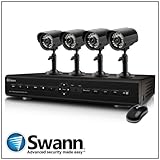
Swann 8-Channel DVR8-2550 and 4 x ADS-180 CMOS SWDVK-825504C

Swann 8-Channel DVR8-2550 and 4 x ADS-180 CMOS SWDVK-825504C
Customer Ratings: 4.5 stars
List Price: $449.99
Sale Price: $309.55
Today's Bonus: 31% Off
Buy Now

I picked this set up last year. mounted the cameras on the eves of my house.

The overlap covers part of the road and with in a month picked up pictures of the vehicle

responsible for a neighborhood break in.

I picked up a second dvr and 4 cameras to completely cover the parameter of my house.

You can adjust the frame rate and with motion configuration I can block out my trees moving in the wind.

I set the camera pointing at the front door and gates at highest quality and the ones over looking the kids

play structure to a lower value to save disk space.

I have older kids and these camera seem to eliminate issues with coming home late.

I put one in the garage and can now find when/where my tools walked off to, "teenage son".

Word got out about the camera and the rift/raft now walk down a different street

It's a better world.

The only con: if you loose power the dvr can scramble your video index and/or stop recording.

I've had to unplug the cameras and restart to log in. Then format the hard drive to get it working again.

After the second time I bought a ups battery back up and plug the cameras and dvrs into this. Now

it works even when the power goes out.

I also run the provided application on my laptop at home to view saved fiels and I downloaded the android app so I can check my garage camera to make sure I really did shut the garage door.

Click Here For Most Helpful Customer Reviews >>

Swarovski Spotting Scope HD ATS-65 High Definition Glass

Swarovski Spotting Scope HD ATS-65 High Definition Glass
Customer Ratings: 5 stars
List Price: $2,043.33
Sale Price: $1,649.00
Today's Bonus: 19% Off
Buy Now

This listing is only for the "front half" of the scope that contains the objective lens. You must also purchase for an additional $500-600 the the eyepiece. The photo shows a complete scope, and the one (1) review is for a complete scope. A complete scope will cost you $2,200!!!

Don't bother shopping for lower prices EVERYBODY has the same selling price. I thought the government ended "Fair Trade" pricing 40 years ago. Apparently not.

Sorry, Amazon, but you do not provide a "Contact Us" option so that I could point out the problem with this listing directly; at least not one my searching found.

Click Here For Most Helpful Customer Reviews >>

ASUS X101-EU17-BK 10.1-Inch Netbook (Black)

ASUS X101-EU17-BK 10.1-Inch Netbook
Customer Ratings: 3.5 stars
Buy Now
Netbooks fill two needs for me. First, I need to access the Internet when I am on the move. Most of the information I need to make a living is somewhere in the cloud and for all practical purposes my browser is my business desktop. I do, however, need to write as well as read. I am writing this on the X101 in Google docs. A tablet doesn't work for me; I must have a keyboard.

I also have to write when I am not connected to the Internet--something that happens to me fairly often. That means I also need a word processor.

To keep me connected and writing, or just writing when not connected, I want a throw-away machine that boots up and shuts down quickly. By a throw-away, I mean something I can ruin by leaving it out in the rain without feeling that I have suffered a significant financial loss. The quick boot is so that I don't have to leave the thing in sleep mode all day to avoid the pain of restarting it. I don't need a lot of computing power or storage. I don't use power hungry applications or keep information I care about on netbooks.

After a weekend with the Asus X101 with Meego, I have the following observations.

Internet: Everything is fine here. The Chromium browser works well and the screen is bright. Videos, images, pdfs, and other files display easily. The wi-fi connects painlessly.

Word Processor and Office Applications: The Asus X101 comes with OpenOffice and a very basic text editor. I use OpenOffice in my physical office and like it in that context. OpenOffice, however, is big and acts a bit clunky on the X101. It opens slowly and at times the low powered X101 struggles with it. Something like Jarte--a little more sophisticated than a simple text editor, but less than a full office suite--needs to show up on the Asus application site.

Keyboard: It has a chiclet keyboard which is not as comfortable as a full sized keyboard, but it isn't bad. I have hands that can palm a basketball, yet I was up to full speed typing after an hour or so of getting the feel of it. One thing I like is that the touchpad is easy to turn off so you don't accidentally hit it when typing.

Meego: The Meego operating system boots up in about fifteen seconds. This is better than windows on a low powered machine, but not great. It shuts down almost instantly. I found configuring and then navigating Meego a bit confusing at first, but I eventually got a desktop that works for me. I can now navigate multiple applications without having to think too much about the operating system. That is good.

Meego Applications: There is a Meego App Store that comes with the computer,but the shelves are almost empty. I didn't see anything I wanted, but, other than a middle of the road word processor, there isn't a lot I need that isn't included.

Battery Life and Weight: Batteries are heavy and this thing is not. It is very thin and light. You pay for it in battery life. I have gotten between three and four hours out of a charge, a fairly short time compared to heavier Asus netbooks, but not bad compared to many full size notebooks. It has a reasonably small plug, and no unwieldy power brick.

I have only had the X101 a few days, but I consider it a keeper. It does a few things well and those happen to be things that I need done. I am over searching for the one machine that does everything. The X101 provides cheap lightweight connectivity, a workable keyboard, and some basic stand alone applications. If you need a lot more than that, I would look elsewhere.

Click Here For Most Helpful Customer Reviews >>

InFocus X2 Multimedia DLP Projector

InFocus X2 Multimedia DLP Projector
Customer Ratings: 4 stars
Buy Now
Bottom line best major purchase I have made since I bought a home with a finished basement!

I got the projector and mounted it on the ceiling in my basement projecting on a light-brown wall. I expected that I would need to paint the walls white, or get a screen, but was shocked by the amazing picture quality. Here are the details:

1) Comcast Cable with HiDef Box. Hidef program is so amazing it makes me want to cry. Sports programing blows the mind away. I even enjoy watching boring hi-def shows with the wife, like the Oscars, just because I am so amazed at how crystal clear the picture looks. You feel like you are there! Regular TV looks surprisingly great too, but setting it up right is critical. Make sure to change the aspect ratio back to Native (vs 16:9 when watching hi-def channels). Ensure that the HDTV cable box has the following settings:

Aspect Ratio (controls regular programming) = 4:3 letterbox

Output Type (controls High def programming) = experiment with 720P vs 1080i

4:3 overide (controls regular programming)= 480p.

I am also using the expensive $99 monster DVI cable to connect to the cable box. This is essential to make regular TV look great vs grainy. Get the DVI to M1 connections, wires and adaptors you MUST budget this into your overall budget or the projecter will not be a great buy (see my "problem" section below).

2) X-Box. I purchased the Hi-Def cable/wire from Microsoft for $20. Once you buy the cables, you can go into the Xbox dashboard settings to allow for 720p and 1080i. Most games are in 480p and 16:9 format. The few Games in highdef look fantastic! You can check hdtvarcade.com to see the exact resolution of every game.

3) DVD player: Since the Xbox only outputs in 480i, I wanted to try the upconversion DVD players. I first tried the Denon 1910. That did NOT work when using a DVI cable!!! It might have been because it was refurbished or possibly it was because the Infocus X2 is not HDCP compliant?? I'm not sure, but the 1910 warns against non-HDCP compliant units and InFocus says that x2 is non-compliant so that's my best guess. Next I tried the TOSHIBA SD-5970. That worked, and I hooked it up using the $99 Monster HDMI to DVI cable. I'm not sure if it was worth it, because DVD's look great, but NOT Amazing compared to HiDef Comcast programming. The verdict is still out, but I have never seen any of the DVD's like Finding Nemo that supposedly look MUCH better with progressive scan DVD's. I can't tell much difference between when DVD is set to 720p vs 1080i HDMI output.

Once again, everybody that comes over, including the sceptic wife, is shocked by our basement they all say its like a full-scale theater, much bigger and clearer than a regular big screen TV and I don't even have surround sound yet that'll be my next big purchase. Infocus X2 is highly recommended, but be sure to check out the problem section below:

Problems

1) My InFocus X2 does not have any component inputs. That means to get premium quality, you must come through the M1/DVI input. If you have a DVD, Cable box and Xbox like me, it is a real pain to switch the cable in the back (especially with a ceiling mount). I got myself a step ladder to make it easier. The DVI switcher for 4 DVI cables is TOO expensive, almost $400.

2) Be prepared to spend at least $3-400 after you get your InFocus to purchase DVI cables for the cable box, possibly HDMI cables if you buy a progressive scan DVD player, as well as adapters to connect your DVI cable to the M1 computer port... Its definitely worth it, but just be prepared. In my opinion, the progressive DVD player is optional (saves you approx $150), but the cables are mandatory.

3) No way to turn off unit with remote (and yes it is still a little noisy in whisper mode, but once the movie starts you can't hear it anymore). I have it set-up so that after it cools/powers down I just turn off the entire unit on the wall switch since it is ceiling mounted.

Click Here For Most Helpful Customer Reviews >>

Samsung UN50EH5000 50-Inch 1080p 60Hz LED HDTV (Black)

Samsung UN50EH5000 50-Inch 1080p 60Hz LED HDTV
Customer Ratings: 4.5 stars
Buy Now
Many of these TVs don't have a Samsung panel (the screen/the part that has/makes the image!)! I cannot believe this has not been mentioned. It makes a SUBSTANTIAL difference, because some panels they use should be in TV's that cost $100 less.Can you imagine buying a car because you know its manufacturer uses great, reliable engines, only to find out that they use completely different engines without telling you, all of which are of lower quality? Samsung does this with their TVs, and some of them don't EVER have Samsung panels (e.g., the 37" model will NEVER have a Samsung panel because they don't make 37" panels). Samsung uses 4 different panel types from four different manufacturers each with a substantially different technology.

You can tell which panel YOUR TV has by the "Version" on the sticker outside of the box. There's also a sticker on the back of the TV; the "Version" code is below the Model number and above the S/N. BTW, reviews can't be interpreted without the four-digit Version code because they are quite simply different TV's. Here's how to interpret them:

("x" means a number, probably from 1-4, that represents the version of that panel higher means newer but not always better).

TH0x or TS0x: Samsung S-PVA panel (possibly just a PVA, if you're less lucky): This is what you thought you were buying. Best color, best black, best viewing angles.

HS0x: Sharp ASV panel: Lower contrast ratio, more narrow viewing angle. I read HS02 in particular has terrible ghosting.

A_0X: AOU A-MVA panel: Even lower contrast ratio.

CH0x or CM0x or CS0x: Chimea S-MVA panel: You lost the lottery. Markedly worse in every way way worse viewing angle, color reproduction, etc. Just a terrible rip-off.

Mine, from Amazon, is an HS03, so a Sharp panel. I will be testing it tomorrow (DVD and watching football no Blu-ray). There is a decent chance I return it, because it is not a Samsung. Also? Sony and Panasonic do much less "panel lottery" and are vowing to stop entirely. LG does not do a panel lottery. Samsung has absolutely no plans to stop, and they only use "standards" that won't reveal a difference between the different panels.

I will update after doing more testing. I just simply could not believe that this was not mentioned. Nothing like finding out you paid $500 (40" model) for a $400 TV when that extra $100 could have been used for sound, Blu-Ray, etc.

**Other reviewers, please, update your reviews to give your version code!**

More reading:

UPDATED 10/24/12: Added info on how to find version number without the box.

Click Here For Most Helpful Customer Reviews >>

Tamrac 5588 Expedition 8x Photo/Laptop Backpack (Black)

Tamrac 5588 Expedition 8x Photo/Laptop Backpack
Customer Ratings: 5 stars
List Price: $419.95
Sale Price: $312.68
Today's Bonus: 26% Off
Buy Now

I got this backpack as a Father's Day present. I'd been looking for a large backpack to combine the camera gear and the laptop, and this seemed like an ideal bag to carry all my stuff for the weekend getaways.

Unfortunately, my experience with the backpack did not survive the first encounter. I loaded the backpack up with my camera gear (2 D/SLRs, 5 lenses, three flashes, batteries and PSD and other gear) and the laptop. The total weight including the backpack itself was 30.2lb. The first time I tried to heft up the pack to wear it, the top of the left strap began to tear from the bag. That was it. That was all it took to convince me to return it to Amazon. I'm sorry, if something as fundamental as the shoulder strap of the backpack can't hold the weight, then I have no confidence in the durability or the workmanship of the pack.

For those interested, I've uploaded a photo of the damaged strap.

Click Here For Most Helpful Customer Reviews >>

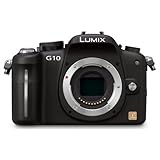
Panasonic Lumix DMC-G10 12-MP Live MOS Interchangeable Lens SLR

Panasonic Lumix DMC-G10 12-MP Live MOS Interchangeable Lens SLR Digital Camera
Customer Ratings: 5 stars
List Price: $824.84
Sale Price: $599.90
Today's Bonus: 27% Off
Buy Now

This is my third Lumix camera the others were more point and shoot, this had what I was looking for in a digital camera automatic exposure and focus as well as manual control of both focus and exposure. The fast mos sensor is a great plus and can now capture subjects in motion without blur. It's easy to use and even though it has many features they are quite easy to learn too.

My previous camera kit was Canon with the FD lenses, I will never buy new Canon kit again after they dropped support for FD lenses. I'm glad I found Micro Four Thirds which appears to becoming the standard across several makes. I can even use my FD lenses with an adaptor. It would have been nice to have had a full frame (35mm) digital camera but they are far too expensive and most haven't adaptors for FD lenses. The surprising feature of using my Canon FD lenses on this camera is that they have an equivalent focal lenth doubled and my telephoto's are really useful my 500mm reflector becomes a 35mm equivalent of 1000mm great for wildlife. The same with my other lenses my Canon 50mm f1.4 becomes 100mm f1.4 who could afford that for a 35mm camera. Canon FD lenses are among the best and I'm glad I can still use them. For those of you who haven't any Canon lenses they are cheap used.

The manual focus is good and easy although the eye level finder could be better it gets the job done. I think this camera with a suitable adaptor would be good for anyone migrating from film to digital it's not too expensive and it has lots of useful features.

The bottom line, I like it it suits the way I take pictures it's also nice to play with trying out different things.

Click Here For Most Helpful Customer Reviews >>

Onkyo A-9050 Integrated Stereo Amplifier (Black)

Onkyo A-9050 Integrated Stereo Amplifier
Customer Ratings: 5 stars
List Price: $499.00
Sale Price: $349.00
Today's Bonus: 30% Off
Buy Now

I purchased this product to replace an ADCOM GTP-500II/GFA-555 pre/amp combo. My housekeeper moved one of my B&W speakers and shorted one of the channels on the GFA-555. The repair would be over $300, so I decided to downsize a bit and go for a modern integrated amp.

First, the bad: I cannot understand why the gorgeous silver version of this unit is not available to US customers. It is a knockout! That being said, the stenciled markings on the faceplate are difficult to read on my black unit, and there is no LED indicator on the volume knob! Also, there is no way to select the inputs directly via the faceplate or the remote you need to press the input button on the remote or twist the input knob on the faceplate repeatedly until you get to the desired input.

Now, the good: The build quality is excellent. The aluminum faceplate and volume knob look great and feel good to the touch. The ergonomics are just about perfect, with the controls very easy to use. The amplifier section sounds crisp (almost thin), with plenty of top end sparkle. Bass is clean and driving at all volume levels. There is no compression as the volume knob is turned past the 12:00 o'clock position as I have heard in many (even high-end) receivers and integrated.

The built-in DAC is very good sounding and very convenient for connecting a TV and other digital sources. It is not warm by any extent, but neither is it harsh. Still, I preferred the sound of my Sony SACD player using the analog inputs over the amp's DAC. Sound is fantastic when connecting a PC's SPD/IF output to the amp's DAC. Definitely and improvement over using the sound card's analog outputs.

The only real disappointment is the phono stage. With my Luxman turntable and Audio Technica ML440 cart the sound is thin and the level is quite low. The dynamics that I once heard with my ADCOM pre's phono stage are gone. I can hear a lot more surface noise now. I will surely be investing in an outboard phono stage and bypassing the Onkyo's.

Click Here For Most Helpful Customer Reviews >>

Ricoh GXR Mount A12 12 MP Digital SLR Camera

Ricoh GXR Mount A12 12 MP Digital SLR Camera
Customer Ratings: 4.5 stars
List Price: $649.00
Sale Price: $619.99
Today's Bonus: 4% Off
Buy Now

This unique photographic equipment, the Rioch GXR Mount A12 12 MP Digital SLR camera (the "GXR Mount A12") presents a reviewer some difficulty to share his user experience in a concise and interesting user review.

As a new owner of this product, I have a few points for the intended user of the GXR Mount A12 review :

1 NOT A STANDALONE PRODUCT

This is a system product it is part of a system and requires the Ricoh GXR body module to and a compatible M-mount interchangeable lens to work ;

2 DESIGNED TO WORK WITH LEICA M-MOUNT LENSES & M-MOUNT COMPATIBLE LENSES

It is a lens-sensor mount, it is part of a camera body built & designed to work with Leica "M" mount interchangeable lenses available since 1954. Today it works with most Leica-M, Zeiss ("ZM"), Cosina Voigtlander (CV) M-mount and where compatible certain LTM or Leica Thread Mount (LTM)lenses with the appropriate M-mount adaptors. Because of the millions of M-mount lenses out there, The GXR Mount A12 comes with a mount testing kit to test the mount compatibility of your lens before you mount the lens ;

3 AN M-MOUNT ADAPTOR WITH A 12.6Mp APS-C SENSOR.

In old "analog film terms", this would be both "the lens mount" and the "film" but of course things are much simpler to classify this as a "Digial SLR Camera body" because of the electronic components but it is NOT a standalone camera body product unlike the Leica M8/M9 because it the body is complete only with another system part, the Ricoh GXR Body module.

4 ONBOARD 1.5X SENSOR CROP MEANS IT IS A DEFAULT 1.5x TELECONVERTER.

The smaller than 35mm film format sensor of the 12 Mega Pixel APS-C sensor of the GXR Mount A12 has a 1.5x crop to the image taken with M-mount lenses, for example the Leica M-Summicron 50mm F2 would become a 75mm F2 M-Summicron lens, the 35mm F2 M-Summicron becomes a 52.5mm F2 M-Summicron,and the 90mm F2 M-Summicron becomes a 135mm F2 M-Summicron, In a nutshell, the usual 35mm,50mm and 90mm set-up becomes 50mm,75mm and 135mm! Add in an affordable (non Leica) lens like the 15mm f4.5 Voigtlander Superwide Heliar and you have a gang of four of 22.5mm, 50mm, 75mm and 135mm on your GXR! ;

5 RETAINS THE PERFORMANCE & CHARACTERISTICS OF THE LEGACY M-LENSES

The GXR mount does not interface electronically with M-Mount Leica lenses with electronic contacts. Since it is made as an adaptor to retain much of performance and characteristics of "analog film era" M-mount lenses, The GXR Mount A12 is quite minimalistic in terms of enhancement to lens, but the good news is, it still retains the old favour of your most favourite M-lenses, including those you received as an gift from your grandparents.

6 RELATIVE EXPENSIVE BUT COST EFFECTIVE NICHE PRODUCT

Although this is a relatively expensive product, its cost could be measured against relatively more expense product like the Leica M8, Leica M9 and the 2x crop micro-fourthirds (with expensive adaptors) product currently available.If you been saving up for an M8 or M9, this may be the "next" best choice available to date. Key advantage over the micro-fourthirds (MFT) Olympus Pen or Panasonic GF-series is the bigger 1.5x crop APS-C sensor.

7 REPLACES HIGH COST OF CONSUMABLES THE FILM

Replacing the hefty cost of consumable like film means that user is more encouraged to experiment and play with the M-lenses they already owned and to get the most out of the relatively expensive but extremely well built M-mount lenses. Though some would agrue that M-lenses were made for film, my comments are based on sound economics and does not imply that it would replace the quality of photographs made with film.

8 TWO MANUAL FOCUSING WITH FOCUS ASSIST MODES

Recommended for photographer who loves to manually focus their lenses only. The mount does not convert the lenses to Auto focus but it comes with 2 focus assist modes in case focusing with the 3 inch LCD screen of the GXR body module proves to be a challenge and requires some practice.

9 EXCELLENT IMAGE QUALITY AND PRICE-PERFORMANCE

This largely depends on the interchangeable lenses used, however, we are talking about the top-end class of lenses to "mate" with a optimal and high performance digital sensor. In the hands of a seasoned photographer, the technical specs, image quality, optical performance would meet the price of this GXR. Furthermore, the added cost of modifying M-lenses with electronic contacts is avoided, leaving the mechanical solid old lenses as they are.

FIVE STAR PRODUCT

As a owner of two Ricoh GXR cameras with the S10 and A10 interchangeable modules, and half a dozen old Leica M mount lens collection ; I had purchased this product on its release to the retail store without reading any review, a bold move if the product turns out to be a lemon-given the hefty price-tag.

Alas, the GXR Mount A12 has met and exceeded my expectations as a niche solution and a very compact and a GXR system built on high performance gear set-up. Thank you for reading this user review.

Click Here For Most Helpful Customer Reviews >>

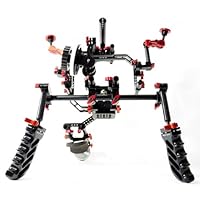
Gini Rigs Advanced Extreme 17

Gini Rigs Advanced Extreme 17
Customer Ratings: 5 stars
Buy Now
I can't tell you how amazing this rig is.

Just outstanding.

I still would pay twice as much for this rig.

Instead of buying piece by piece ....this package comes with a follow focus, counter weight, cheese plate, construction, design, and the grips are just so beautiful....I mean look into this rig.

Just SOLID!!

Click Here For Most Helpful Customer Reviews >>

Samsung 3.6-Inch Galaxy Player (Discontinued by Manufacturer)

Samsung 3.6-Inch Galaxy Player
Customer Ratings: 4 stars
Buy Now
My older ipod nano is sadly starting to die on me, and so I decided to look around for something new. I am not a fan of the design of the new weirdly small nanos, but I didn't want to spend a ridiculous amount of money on an ipod touch or classic. I became very excited when stumbling upon this player, and after much debate, I finally gave in and decided to get the 3.6 player.

I've had it for about a week now, but I am very happy with it. I was mostly reluctant to buy this because I guess you could say I'm "married to itunes". All of my music and so on has been itunes centered for the past 5 or 6 years, so transitioning and working around it is a little weird, but I think I'll just download Samsung Kies or something and see how that goes. I'm really trying to avoid having to use Windows Media Player. This is probably my only big issue.

The screen is great! I've used friends' iphones and itouches before, and this screen definitely is just as good if not better. (Then again, I am definitely not an apple/mac person at all, haha. But I still stand by what I said.) Typing anything on it is a breeze, and since I have skype on mine, sending quick IMs is super quick and easy. It's a very responsive screen, and feels very solid.

So far it's very fast. It hasn't frozen on me yet either. My previous ipods would all often freeze up or need to be restarted. It is still pretty new though, to be fair.

Another main reason I got this was because I can easily make this a 32GB, but don't have to spend the extra freaking $100 for it! This is a MAJOR plus for me. Plus this already comes with a 8GB card in it, and it costs over $50 less than the 8GB itouch.

It stores a lot more apps than my phone can handle (which is only a few), so personally for me this player has been great for me because I can finally download a bunch of apps that I've wanted to.

And, another personal plus for me, my player came preloaded with Angry Birds, one of my big addictions. And it's much faster than my older android phone can play it.

Oh, and it didn't come with those awful, uncomfortable ipod earphones I hate so much! So now I have a decent pair of back-up earphones that I won't dread using when the time comes.

My only other annoyance (besides my itunes thing) is where the power button is on this player, because I'm so used to an ipod's hold button being on top of the player. But that's no big deal, really. I'll eventually get used to it.

All in all, move over ipod, you've got pretty tough competition. This is really a great MP3 Player, and I am very happy. Thank you Samsung!!

UPDATE 9/7/12: I just downloaded DoubleTwist thanks to a suggestion by someone who commented on my review. It totally solved my itunes problem! And it was SO easy too, and automatically transferred my music into it from itunes, I didnt have to do it myself or deal with it taking hours to load. It was immediate, and when I plugged in my Galaxy Player, DoubleTwist immediately recognized it. (Keys player was pretty bad too, so I'm so happy that DoubleTwist exists!) My itunes problem is pretty much gone now, and I'm very happy.

Click Here For Most Helpful Customer Reviews >>

Canon EOS Rebel SL1 18.0 MP CMOS Digital SLR with 18-55mm EF-S

Canon EOS Rebel SL1 18.0 MP CMOS Digital SLR with 18-55mm EF-S IS STM Lens + EF 75-300mm f/4-5.6 III Telephoto Zoom Lens + LP-E12 Replacement Lithium Ion Battery + External Rapid Charger + 16GB SDHC Class 10 Memory Card + 58mm Wide Angle Lens + 58mm 2x Telephoto Lens + 58mm 3 Piece Filter Kit + Mini HDMI Cable + Carrying Case + Full Size Tripod + External Flash + Multi Card USB Reader + Memory Card Wallet + Deluxe Starter Kit DavisMAX Bundle
Customer Ratings: 5 stars
Buy Now
I bought this for $925.12. After 8 days I noticed that price dropped nearly a $100. I went to my orders and clicked "return item" and mentioned the reason. I immediately got an email saying Return request closed and the reason being "Refund without return". Next day I got Refund on order for $120. I had researched DavisMAX before buying and based on the reviews, I purchased this because of positive reviews and also it was the best deal i could find. Completely satisfied with the professional handling of the customer query.

Now, as far as the product is concerned, The instant i opened the box, i found all the canon products in their original packing. Unboxed them and immediately registered the product on canon website with the serial numbers (body and both the lens). Overall satisfied with the cannon stuff I got. As far as the other bundled items go, the bag is of a good quality, I liked the compactness of the big tripod, i never had a chance to test out the effectiveness of the 3 filters or the 2 extra lens attachments(wide angle and 2x). The additional battery with car charger was a plus.

Regarding the cons, I would have preferred an USM lens for the 75-300mm. It is hardly $40 more and i would have definitely paid that extra $$$. The bundled 75-300mm is not USM but i bought it anyway because if i buy them separately the cost was going to be around $1000.

Another thing this bundle is missing is the 40mm pancake lens, it about $135 but worth the price addition because it would really compliment the worlds smallest SLR body with the smallest lens and u would literally have point and shoot camera size which gives an amazing quality. I am buying the "Canon EF 40mm f/2.8 STM Lens", will check if DavisMAX has it or else will order from some other vendor or amazon.

Click Here For Most Helpful Customer Reviews >>

Metz 58 AF-2 MZ 58324N Digital Flash for Nikon Cameras

Metz 58 AF-2 MZ 58324N Digital Flash for Nikon Cameras
Customer Ratings: 4.5 stars
List Price: $445.00
Sale Price: $399.99
Today's Bonus: 10% Off
Buy Now

Easier to set, has fewer buttons, logic flow is more intuitive, simpler. Has secondary head facing forward, for shadow fill and eyes catchlights when bouncing light, unlike any Nikon brand flash.

You will need to update the firmware in order to use this flash with the newest Nikon DSLR bodies, easily done online at the Metz website, using a common USB cable attached to the flash's USB 2 port.

Disregard the unfavorable comments about it not working with new cameras, given by buyers who did not get this information, or did not read it in the instruction book provided with the flash.

Click Here For Most Helpful Customer Reviews >>

Canon 10x42 L Image Stabilization Waterproof Binoculars

Canon 10x42 L Image Stabilization Waterproof Binoculars
Customer Ratings: 5 stars
List Price: $1,999.00
Sale Price: $1,317.99
Today's Bonus: 34% Off
Buy Now

.

NOTE: Although VINE VOICE is written by my name, I purchased these binocs at full price, long before VINE was started by Amazon.

Seems very expensive for a pair of binocs, but the price is clearly justified as Canon has supplied some amazing optical wizardry in a small compact package. I will outline what makes these particular binocs so unique....

Before you read too much about these specific binocs, u might want to go down further in this review, where I explain what factors make the best binocs for your needs. (day/night, age, strength, tripod, etc)

Details on these Canon 10x42L binocs:

1. TFOV 6.5 Degrees. TFOV = True Field of View in visual optics, TFOV defines how much of the scene (subject) is visible inside the image circles you view through the EP's. (EyePieces). The greater the TFOV is, the easier to locate subjects you are seeking, as you are viewing more of the subject area. (such as finding wildlife that appears in the periphery of the image circle) To be specific, the 6.5 degrees means, if you stood in the middle of a circle, and pointed the binocs to the circles circumference, you could see a 6.5 deg. "slice of the pie". It doesn't seem like much, because we can see approx. 110 degrees with our two unaided eyes, but the binocs offer 10x magnification, which is why we see such a small piece of the pie. But on a relative basis, for binoculars of this magnification, the 10x42L's TFOV is exceptional, which also is what makes them very nice astro binocs for stargazing, as TFOV allows you to pack more stars in the viewing image circle.

Large TFOV is a function of the magnificaiton, but also the AFOV (explained below), and requires relatively short fl's EP's which must be well corrected for aberration / distortion, and also must contain large field stops in the EP's, (Eye Pieces). Both of these optical characteristics are very difficult to design and build...this is true in all optics, not just binoculars. 6.5 deg. TFOV is one of the most generous TFOV's available in ANY binocs of this magnification (10x), even those costing several thousand dollars. This is one of the features that differentiates lower priced binocs from higher priced binocs., as larger TFOV requires bigger, more complex, and therefore heavier glass.

2. AFOV 65 Degrees. The "Apparent Field of View" is a clear and sharp 65 degrees. AFOV defines the size of the image circles you see when looking through the binocs. This means, at 65 degrees, your eye must swing 65 degrees, (+/32.5 deg.) left to right (or up n down) to see the entire image circle. To put this in perspective, one unaided eye can see 90 deg. without swinging. Lower cost binocs often have 40-50 deg AFOV, which gives you that "looking through a tunnel" feeling.

AFOV is unrelated to the TFOV, which designates how much of the subject (slice of the pie) you see in the AFOV image circles. AFOV and TFOV is what differentiates expensive optics from lower priced optics in the same class (such as 10x30, 10x40, etc) as large AFOV & TFOV requires expensive and complex glass elements. The other major factor though, is optical image quality, as our eyes are sensitive (and appreciative) to both of these variables, as we always want to compare visual optics to our unaided vision as a reference.

At 65 degrees, Canon is nearing the limits of AFOV, even in very high end astronomy gear.... and probably one of the largest AFOV's for any binocs I am aware of. But Canon maintained the sharpness in the entire AFOV image circle, with virtually no distortion! (a remarkable accomplishment in optics for this mid tier price range) The larger the AFOV, the more life-like the view becomes as it fills your retina with imagery, avoiding the "looking through a tunnel sensation" which smaller AFOV's deliver. As mentioned above, an unaided human eye can see 90 degrees. So at 65 degrees, you are filling 2/3rds of your retina with imagery (retina = where the image is focused at the back of your eye) compared to unaided vision. This produces a feeling of immersion (such as cinema screen vs. home tv), and this large AFOV really adds to the, WOW factor. This is the largest AFOV I have ever seen in a pair of binocs at ANY magnification. This large AFOV is the first thing that will strike you when using these binocs. Unless you venture into high end astronomy gear (costing many times these binoculars) it's hard to find find good optics with a AFOV this wide, AND, with sharpness right to the edges AND virtually NO distortion. Once you compare these binocs side by side with others that have less AFOV, you don't need to understand the technical details once you experience it.

3. L Glass.... very sharp glass, with no false color and pinpoint sharpness, nearing true APO chromatic lenses. This is very evident when viewing stars at night, the stars are pin point sharp, better than most astronomy binocs I have used.... and with the the wide TFOV and large AFOV, you feel like you are space walking while laying back on a lounge chair. Of course, with only 42mm objectives, it helps to be in a very dark area. If astro use is the primary intended use, then larger objective diameters are better suited. 50 70mm objectives are ideal, such as the 7x50's I mention below...or if you use a tripod, then max. objective diam becomes more desirable such as 15x80 or even 20x100. So, these binocs make good astronomy binocs, but are not ideal...there is better options with bigger apertures for star gazing... it's just a nice add-on feature if your intended use is mostly daytime viewing.

Those who use high end photographic lenses know how prized Canons "L" lenses are...hence why I was surprised to see "L" glass in these binocs. L glass at this price point is relatively unheard of for Canon.

4. IS (Image Stabilization) well, this has been beaten to death in many reviews.... but IS is the single biggest breakthrough since binocs were invented ASSUMING you want to hand-hold at high magnification. Otherwise, the IS feature is not as significant. The IS in these 10x42's are superb... the "push once" IS button is a nice feature, as you don't have to continuously hold down the button while viewing. The IS has a motion sensor which senses when viewing is finished. It will then shut down the IS, to save battery life nice feature. But other Canon binocs have IS, so it's not what sets the 10x42's apart from the other Canon IS binocs... But if you hand-hold, and desire at least 10x or greater magnification, IS should be your single most desirable feature in binocs. Remember though, hand holding for long periods of time can be hard on the arms based on your age and fitness level. IS adds weight!

5. Aperture (Objective lens Diam.) 42mm obj. diam. at 10x magnification provides very bright views, specially during mid day, and good (but not great) at twilight. They are also "just" large enough to use as astro binoculars...once you begin star gazing through these you will become interested in the night sky. Buy a good binocular astronomy book and you will be amazed. If they tried to go with larger objective lens diameters, the weight of the binocs would become unruly, creating arm fatigue even for the young and strong....while these binocs can already be too heavy for the elderly or frail user. I feel Canon reached a good compromise at 42mm objectives. My one complaint about the design.... A pair of UV filters are a good idea to protect the objectives as the elements are not recessed far enough behind the rubber front rims. (one of the few shortcomings I have found with these binocs) I have a pair of Fuji 10x70's, which the 70mm objectives, which allow almost 3x more light in....yet with the IS and pinpoint sharpness, I am quite amazed how these Canons perform considering their small objectives for astronomy binocs. I am pretty sure Canon did not design these for astro binocs. But night time viewing is very acceptable with the 42mm objectives, as they allow 2x the light vs. normal 30mm objectives, and the added light is very apparent in added sharpness and contrast.

6) Exit Pupil diam.... The exit pupil diam of any visual optic, is the diameter of the circle of light that exits the eyepiece and funnels into (or on) the eye (specifically, the cornea). This exit pupil diameter is measured at the ER (Eye Relief distance) The diameter of the exit pupil is determined by objective lens diam. / magnification. 42/10 = 4.2mm wide. The significance of this diameter is how it relates to the diameter opening of your eye pupil. If the exit pupil diameter is larger than your eye pupil opening, it means several things....

a) some of the captured (and projected light) is being wasted, as its overflowing the bounds of your eye pupil opening. This wasted light means, you are carrying heavier binocs than you need to, as the weight and size of binocs are a function of the front objective lens diam. and magnification.

b) However, this extra light, provides a useful benefit, as it allows some eye placement leeway, so you don't need to be ultra precise in setting the binocs IPD (Inter Pupilary Distance setting) and keeping the binocs dead still. As when the exit pupil of light misses your eye pupil opening, you get that annoying "black-out" condition in your eye. This happens very often when the exit pupil of the binocs equals your eye pupil diam., in the exact amount, i.e. no room for error. Soon one eye pupil will miss the projected light circle, and you will get that annoying partial black out in one, or both eyes. As we age, our day / night eye pupil diameters change radically, so binocs buying decision making process is VERY age sensitive, explained in detail below.

c) The larger exit pupil diam. also allows your eyes to swivel a bit inside the image circle without the black-out condition. With these 10x42's, at 4.2mm exit pupil diam., assuming you set-up the binocs IPD adj. precisely to match your eye spacing (this marked by IPD distance in mm, so you can easily re-set), as well as the EP to cornea distance (by twisting the lens covers) you have very little leeway to swivel (rotate) your eye inside the exit pupil diam., so this forces you to keep your eyes looking at the center of the image circles. Therefore you must constantly move the binocs to keep the subject of interest centered in the image circle. This can be quite annoying when watching a flock of birds or wildlife...vs. having a larger exit pupil diameter, where you eyes can swivel around a bit, without moving the binocs.... but, that luxury comes at a big price, you must carry larger objective lens binocs to gain this benefit. IMO, this issues is often overlooked in selecting binocs. If anyone compares larger exit pupil (vs. your eyes pupil diameter, explained below) side by side, everyone will enjoy the added leeway larger exit pupils offer. Hence why it sometimes makes sense to go for a lower magnification binocs, as they offer larger exit pupil diameters at the same objective lens diameter, see formula above. Subject matter is significant here as well. If your subject matter is still, this becomes less of a factor.

To further complicate this matter, our eye opening dilates based on the amount of light hitting the eye. For mid day viewing, most human eyes are dilated down to 2-3mm opening, regardless of age. However, as we age, our max. eye pupil opening becomes smaller....this is very significant when selecting visual optics. Next time you get an eye exam, ask your eye Doc, what the diam. of your dark adjusted pupil is. (they measure this) When we are young, our eye pupil will dilate open VERY wide at night. But aging is very unfriendly to the eye in this regard. Here is a table showing how our max. pupil size becomes smaller as we age...

Age vs. Eye Pupil Diam. (Avg)

Age... Day light pupil...Night light pupil (mm)

20...(4.7)....(8.0)

30...(4.3)....(7.0)

40...(3.9)....(6.0)

50...(3.5)....(5.0)

60...(3.1)....(4.1)

70...(2.7)....(3.2)

80...(2.3)....(2.5)

As an interesting side note.... this chart demonstrates how our night vision declines rapidly with age. The relative light that can enter our pupils is based on the area of the pupil, which is a function of the pupil diameter, pi r^2. If you wonder why your night vision is so poor vs. your younger years, here is why....

vs. a 20 yr old, here is the light reduction we see at the same ages as above....

at 30 yrs of age, we see 33% less light than a 20 yr old.... at,

40 yrs, 44% less light

50 yrs, 61% less light

60 yrs, 74% less light

70 yrs, 84% less light

80 yrs, 90% less light

Back to binoculars.....

The significance of this chart, is help determine how wide your eye pupils are at a given age, which helps you better select what size exit pupil diameter binocs are best suited for you. Of course, u must consider whether you plan to use the binocs for day / night viewing, as this radically changes the demands on the binocs. Night viewing often requires larger objective lenses for best viewing, till you get older, where it matters much less, as your eye pupil will simply not dilate wide enough to offer u any better views... so you are carrying heavier binocs than required. It's obvious from the chart, binoc buying decisions vary tremendously based on your age. Here is examples of two extremes....

If you are 30, and use binocs at night, you would benefit greatly by binocs that have exit pupil diameters to match your 7.0mm eye pupil opening. Such candidates are, 7x50's (7.1mm), 10x70 (7mm), etc. Unfortunately, no binocs are made to produce larger exit pupils, cause the market would be way to small, so you must keep your eyes centered, and move the binocs to keep the subject of interest centered to avoid black-out condition. Anyway, these are VERY heavy binocs, some weighing in the 6 lbs range, but the views are spectacular if your eye pupil opening can accept such a large exit pupil, i.e. u are very YOUNG!

On the other extreme, you are 80 and need to only accommodate your 2.5mm eye pupil diam. for day or night time viewing. Now, a tiny pair of binocs, 10x30 (3mm), 7x20 (3mm) will provide your eyes as much light as they can possibly absorb. To gain a bit more eye placement leeway, it always makes sense to use slightly larger exit pupil diameter vs. your eye pupil diam, which means bigger objective lenses for a given magnification. But sometimes weight and size take precedent. This is where personal preference enters into the buying decision, then, travel, arm strength, magnification needs, etc. All these factors fine tunes your buying decision. But bottom line, Younger people can benefit greatly by heavier binocs, vs. older users who gain NO benefits by the heaviest binocs... and all binocs become heavy in due time, unless u have them mounted on a tripod or monopod.

But even during mid day viewing, a person 20 years of age would benefit greatly with objective lenses 2x the diam. at a given magnification vs. a person 80. One of the reasons is, larger objective lenses produce sharper images due to less aperture diffraction. If you double the objective diam, you double the sharpness within a given magnification. Hence the huge selection binocular magnification and objective lens sizes.

In general, larger objective lenses have many advantages (mainly for the magnification and for larger exit pupils for the young).... but, being offset by significant added size and weight, and of course PRICE.

Anyway, the Canon 10x42's at 4.2mm exit pupils are in a sweet spot for DAYTIME viewing, as they almost fully fill the eye pupil of the 20 year old, and provide some eye placement leeway for the older aged person hence the 10x42's size has a wide market appeal.

7. Retractable eye cups. These assist in eye placement. As these binocs are a "one size fits all", they have good Eye Releif (ER) of 16mm. ER is the distance the center of your eye should be at. The eyes center is approx. 12mm behind the cornea (eye lens). This leaves about 4mm, 1/6th of an inch, between the cornea and the glass. Eye glass wearers must move further back, reducing their capacity to rotate their eyes throughout the image circle, soon, vignetting occurs (image clipping) 16mm is on the low side of required ER for EG wearers. But don't expect more from other makers, its too costly to design long ER visual optics. For non EG wearers, it is difficult keeping your pupils at exactly 16mm from the glass.... so Canon allows the eye cups to twist inward / outward to accommodate the depth of your eye sockets. When the rubber cups touch above your eyeball, (at about the eyelash) it provides a great reference point to keep your eyes at the exact ER position to maximize the exit pupil placement onto your cornea. It also assists in keeping the binocs still as it is touching your face. Remember, you are trying to keep the small exit pupils of the binocs to remain affixed over your eye pupil opening, so keeping the binocs steady is important to prevent that awful "black-out" effect, when the exit pupil misses your eye pupil opening. This is different than the image shaking due to the high magnification factor, which the IS (Image Stabilization) feature addresses. For a "one size fits all" product, this is a very well designed system to overcome the difficulty of maintaining proper eye placement positioning while viewing.

The message above is.... binocs are highly personalized items...setting up all the variables, IPD adj, focus for each eye, and eye cup setting, is important to maximize the use of the binocs. Giving the binocs to others, and having all the settings compromised really can be frustrating as u must constantly fine tune the settings for your use. So consider this when with others...make them get their own pair :-)

If you are forced to wear corrective EG's due to astigmatisms (the binocs will correct for mismatched refractive errors with a diopter corrector on the right eye piece), AND you wear thick glasses AND have deep set eyes, then the 16mm Eye Releif will fall very short, as a result, the view will be vignetted and you will no longer be seeing all the image circle. If this is the case for you, see below for other sweet spot binocs. So why aren't all binocs designed with longer ER? Actually, the 16mm on these binocs is considered generous... in gen. binocs are not friendly to EG wearers.

8. Diopter adjustment to accommodate different refractive errors of the eyes, allowing many EG wearers to view without their EG's assuming they do NOT have astigmatisms. (which unfortunately, the user often will be forced to wear their corrective EG's). You use the focus adjustment for one eye, then correct for the other eye with diopter adjustments. The diopters are marked for easy recall when others use the binocs and change the diopter correction.

9. Rugged and waterproof. The build quality seems superb.... binocs are very sensitive instruments, and the more expensive the binocs, the better the optics and mechanicals need to be protected against hard hits, otherwise, they can loose their collimation (lens element alignment). Canon did a great job projecting these binocs, as well as making them water proof, another expensive feature in binocs. The binocs also do not fog internally as their barrels are sealed. Of course the external glass is always subject to fogging when the temp of the glass is below the dew point temp. of the area the binocs are exposed to. So beware of letting the binocs get cold, then bringing them into a warm humid environment. (this applies to all camera lenses and binocs, not unique to these 10x42's)

10. Excellent collimation. These binocs are very well collimated, which adds to the beauty of the view. Each eye sees the same subjects within the image circle and requires no divergence or convergence at infinity. This is a very labor intensive process to provide such accurate collimation, something not often found in lower priced binocs., and the difference can mean "WOW" type viewing, vs. "these binocs give me a headache" viewing. My binocs were very well collimated, but since I never saw other 10x42's, not sure if mine were the lucky ones...so your mileage may vary... if you can test them for viewing comfort, as perfectly aligned binocs should be as comfortable as your natural unaided vision.

If you buy these binocs, or any expensive binocs, first thing to confirm when you open the box, confirm the two sides are well collimated, if not, send them back, as its very difficult to collimate binocs and they will provide you with years of headaches / light headiness, dizziness, etc.! A simple test to determine collimation, focus on single subject at infinity... preferably something that fills the center of the image circle only (such as a street lamp many miles away)....then blink your eyes simultaneously, so you see right view / left view / right view, etc..... If the binocs are not well collimated, you will see the subject jumping between views, as the brain holds the previous image long enough (image persistence) to notice the difference in placement between the two eyes. While perfect horizontal collimation is not required as the eyes can converge (move together in cross eyed mode) with no problems, the eyes have very little tolerance for divergence (i.e. move apart, the opposite of cross-eyed, as only a lizard can do) AND our eyes have virtually NO tolerance for vertical divergence, (one eye up, the other eye down) which is what must occur if one side shows the subject higher / lower vs. the other other side. Any of these collimation issues become very apparent when doing the blink test. If any new binocs are out-of collimation on horizontal divergence OR Vertical divergence, they should be returned immediately, as this creates large amounts of visual and mental stress, making the viewing process very annoying, leading to headaches, light headiness, disorientation, etc. (but the avg. person would never know why, they will think its their meds or a food additive, or MSG in the Chinese food they ate :-)

With lower priced binocs, it pays to go to a store and test this out, so you can pick the sweetest pair in inventory, although the store manager may kick you out :-) Yet if a small bit of convergence exist, meaning the two subjects overlap a bit (inward), this is not so bad, as it adds a slight depth sensation for infinity subjects and rarely if ever provides any visual stress... cause its natural to cross our eyes a small bit when viewing close subjects, (assuming its not extreme convergence which would be very noticeable with the blink test) Remember, mental stress caused by collimation issues are a function of "how long" the optics are used, combined with, how poor the collimation is and your tolerance of this oddity which our brain is not conditioned to deal with. If you use binocs for a long time, such as birders do, proper collimation is critical for long hours of viewing.

11. Matched fl's. Canon seemed to pay a lot of attention to assuring the fl's of each optical train, for each eye, are matched in magnification... .this is another very high-end feature which is often not a concern in lower priced binocs, sometimes creating mis matched magnification in each eye, creating a condition called retinal rivalry, i.e. the brain is battling two different sized images, which creates mental stress. Often these subtle differences creates eye strain as well. If the problem is extreme, you can see this in the blink test....not likely noticeable in binocs of the 10x42's quality. (at least not significant enough to detect with such a simple test)

Achieving all these variables, add-up to great binocular vision. Binocular vision is hard to simulate at magnification as a result of many of the issues I pointed out above.... the more variables that go wrong, the worst the experience will be. Clearly these 10x42 binocs have very good QC. Now keep in mind, I may have luckily received a good sample... unless I tested many of samples, I would not know for sure how good the QA is. With Amazons liberal return policy, I felt safe gambling and testing them out.

So now ya see why some binocs cost $50, and others $5k? A lot of features, build, IS, and Quality Control issues.

So overall, these binocs are superb. And if a company other than Canon attempted to make such a fine optical instrument, they would probably cost 2x or 3x the price Canon is selling them for. Yep, this is Canons "claim to fame" making high end optical products affordable... I am not saying $1350 binocs are affordable to everyone...but I am saying, it took a company like Canon to cram all these features in binocs at this price...so Kudos to Canon...

Now, there is a few areas I would like to see improved...

1. front objectives dangerously exposed....I would have liked to have seen an extra 10mm of lens recess. (see below for a fix)

2. Eye cups are a bit hard... a softer rubber would be nice

3. Lens caps poorly designed on front lenses and poor fit on the EP's.... surprising for Canon, but all things considered, you will probably overlook this.

4. IS button hard to find, hard to push. It would be nice to hear a slight beep when they turn on/off.

5. The inter pupillary adjust is very stiff and cumbersome to grasp.

6. Focus could be a bit finer.... a bit coarse for high end optics but sufficient.

7. Weight is heavy, but that is the price you pay for such superb optics and and large AFOV...there is a lot of glass in these binocs. Reducing weight, would either reduce the optical quality or the housings ability to secure the collimation. If you're a frail person, hand holding these binocs may not work for you, test, test, test.

The one issue you should first decide when buying binocs is magnification requirements. IMO, I feel 10x is a sweet spot in binocs....but often 7-8x is enough, and if the binoc are used in daylight, and you are not so keen on the best optics, a pair of the 7x or 8x IS binocs could suit your needs, and you might appreciate their smaller size and weight. Not everyone can hold heavy binocs. On the other end of the scale, the 15 and 18x binocs are quite a jump in magnification for hand held optics. Be sure you need that extra magnification to justify the added weight and inherent less stable images....its much harder for the IS to hold 18x image still vs. a 10x image. (about 1.8x harder :) But if you view things from a great distance, this may be a very important factor. At 15x +, I would consider a small 80mm or 90mm fast f ratio telescope with a Bino Viewer and tripod as a more suitable alternative.

During day time viewing, often, the limiting factor how far one can see with any optical instrument is limited by atmospheric conditions, NOT magnification...hence again, why 10x is a sweet spot for binocs. The obvious, and popular exception, is birding, where the subjects are relatively close AND small! Remember, at 10x, viewing a person at 100 yards, i.e. standing on the goal line, and you on the other goal line, this i is the unaided vision reference. Now, use 10x binocs, and the person will appear the same size in the binocs as if you viewed the person from the 10 yard line. That is a lot of magnification! When adding additional magnification, some of the features of the 10x42's would begin to fall-off... such as the TFOV is reduced to 3.7 degrees, (about half), and the image will loose about 1/3 of the brightness level. The point is, buying binocs is a "reverse engineered decision". First assess what you plan to use the binocs for, then find the binocs that best fit that application (distance, subject size, age, day/ night, handhold or tripod, etc) If you have multiple uses, there often is NOT a "one size fits all", and two pair of binocs are required.

One final subject I would like to mention regarding binocs in general. The beauty of these binocs are their compact size, relatively large objectives, Canons "L" glass and of course IS. If the price of these binocs are not in your budget... one can easily attain a very good pair of binocs for much less money, excluding IS, but yet still have great optics and big (even bigger objectives) If your intended use can tolerate either a tripod or monopod to support the binocs. You can save a lot of money and get a very nice pair of 10x 15x binocs with even better stabilization via tri / mono pod. Nothing holds optics more still than a tripod, (beats high tech IS wizardry) and in most cases, even a monopod can match or beat "IS" performance. Of course, this is more items to carry, so again, it depends on use. If you view by your car, this is a non-issue. Also if you use a monopod or tripod, you can also tolerate more weight and therefore gain bigger objective lenses.... a much desirable feature as it allows for larger exit pupils (see above) which makes binoculars much easier to use as you experience much less, or no black-out (vignetting) conditions when the exit pupil from the binoculars becomes mis aligned with your eye pupil... as explained above, this is very age sensitive issue.

Oberwerk has a lot of good wide objective binocs that offer great views for the dollars. Garrett Optical also has wonderful large apt. binocs. For wide exit pupil binocs, the Fuji 10x70 are my favorite, producing massive 7mm exit pupils, but NO IS, and not L glass, so view is good, but not as crisp as the L glass in these Canons...and of course, only 50 deg AFOV, so much less immersive feeling. Of course, if the tripod / monopod doesn't fit your using style, than nothing beats the "IS" feature when hand-holding binocs of 10x or greater magnification. Birding, concerts, boating, etc., the IS feature is unbeatable.

11/5/06 I have added two images above. (not sure why Amazon removed these) See Customer images below the pix on this page. I have shown the binocs with added UV filters and lens hoods. Considering how expensive these binocs are, and how exposed those front objectives are, I consider these 52mm threaded UV filters and 52mm threaded lens hood mandatory. With this added protection, I don't have the need to use the poorly designed front lens caps anymore as now the objective lenses are fully protected. Worst case scenario, I replace the UV filter if damage occurs, which is not a bad tradeoff vs. constantly taking the objective lens caps on/off. Both the UV filters and the lens hoods I used are from B+W, but there is many less expensive brands to choose from. The lens hoods also do a good job of reducing lens flare, as the objective lenses are very vulnerable to stray light as they are not sufficiently recessed. This is the one shortcoming I was disappointed with, but it was easily correctable, albeit and extra $50 $150 dollars based on the quality of the UV filters and lens hoods you select. Considering these binocs are selling for 1/2 what they are really worth, this does not bother me. But it does add to the overall cost of the binocs.

Don't want to spend this much, on Binocs, and still want to hand-hold?

then, another GREAT binoc size to consider is 7x50.... As mentioned, 10x42 is a real sweet spot for binocular optics. However, this assumes mostly day time use when our eye pupils are dilated down to a very small diameter, usually 3 4mm, which sizes well the 4.2mm exit pupil diam. circle of light coming from the eye lens of 10x42 binocs. AND, it also assumes your binocs have IS, or use a tripod / monopod or some means to hold the binocs still, because at 10x magnification, its very hard to keep the subject still, which can make the binoc. experience very annoying.

The other great sweet spot of binoculars, IMO, if you want to hand-hold, and don't want the weight / cost of a good IS feature..... is 7x50. Below is a Pro / Con list of 7x50 binocs vs. these Canon 10x42L's.... some people may find the 7x50's a better choice for several reasons....

7x50's Pros (Non IS)

1. Much less expensive, even for the best 7x50's (excluding Leica and Zeiss)

2. Lighter weight, due to no IS, and often shorter overall focal length. Overall, a bit smaller in size.

3. At 7x, if you have relatively sturdy hands, the view is acceptable without IS! (Although, not quite as still as these 10x42L's with IS, but close enough) For those who shak

Click Here For Most Helpful Customer Reviews >>

Sigma 50-150mm F/2.8 APO EX DC HSM Telephoto Zoom Lens for Nikon

Sigma 50-150mm F/2.8 APO EX DC HSM Telephoto Zoom Lens for Nikon Digital SLR Cameras
Customer Ratings: 4.5 stars
Buy Now
You can read all the "specs" doing a Google search so I won't bore you with the geek-tails. The simple answer is that this lens does as promised. It is a very nice, fast lens, for a reasonable price. If you are in a "No Flash Photography" zone, then this lens will get the job done, providing you can take a few steps back from your subject. I took it out for it's 1st "test drive" last night at the local bowling alley. The shots were taken at night with 100% ambient artificial lighting and with the D200 cranked up to ISO 1600 had no problem pulling in 1/125 to 1/180 Sec. shutter speeds with the Aperture notched down a couple of clicks from wide open. While I have definitely not put it through all the paces as of yet, I do have a couple of notations:

I like the fact that the lens hood completely covers the focusing ring when reveresed (as in indoor use), yet leaves the zoom ring completely wide open. This makes for very comfortable usage being able to use the full length to steady the camera and having unfettered access to the zoom ring.

Focus is quick & silent, and I haven't yet experienced any auto-focus "hunting" problems.

Shots so far appear very acceptable. Please note that although I appreciate amazon's customer photo "samples", they manage to compress & reduce them so much that they lose a great deal of clarity. The images I've taken are much better than the few uploaded here. Bottom line, this lens takes quite nice photos.

Look & feel is professional & solid, with smooth as silk zoom & focus action. This lens does not "telecope" in and out as do many zooms. It's length remains constant from 50 to 150mm.

The one and only thing I do not like about this lens (and my other Sigma lenses) is that you cannot remove/install the lens cap when the lens hood is installed for outdoor glare protection. Nikon & Tamron lenses have a center pinch design that allows for easy installation/removal of the caps without removing the lens hood. I wish Sigma would do this as well. Some say you do not need a lens cap on when the hood is installed, but they obviously do not live in a dusty (desert) area. I almost knocked it down to four stars for that, but I'm simply too forgiving...

Click Here For Most Helpful Customer Reviews >>